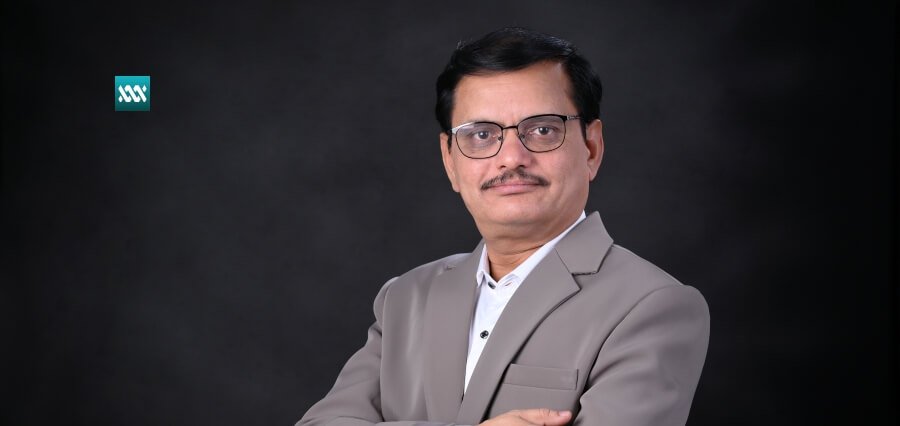
An engineering lab at CADMECH creates a first impression in a way that technology is made to feel less intimidating and more educational. The machinery is not intimidating, but rather intriguing. Well-labeled control panels, user-friendly interfaces, and well-designed workstations help to explain difficult technical ideas easily and with ease. Rather than focusing on having all knowledge immediately, there is a process of discovery that can be learned through the process. This combination of technology and learner-centered design represents the vision of Dr. Prakash Sulakhe, who is the Director of CAD-MECH Engineering Pvt. Ltd and a key innovator in Indian technical education.
This concept came from years of observing the learners who had failed not because of incompetence or lack of determination but because of exposure to technology without proper understanding. This led to his creation of something he calls “Educational Empathy Engineering,” which focuses on understanding, confidence, and discovery for every innovation and design associated with CADMECH.
CADMECH’s Three-Layer Learning Framework
Dr. Prakash’s learning framework at CADMECH is built around three distinct stages. The first stage helps students develop a strong conceptual understanding through visual and interactive learning tools. The second stage introduces guided practical training using simulations, augmented reality (AR), virtual reality (VR), and structured experiments. The third stage gives students exposure to industrial-grade operations, diagnostics, and real-world troubleshooting scenarios.
He aims to help students evolve from observers to operators and eventually into innovators. He believes confidence is the key factor that connects these three stages. “Engineering precision is essential, but educational empathy determines whether that precision creates learning or confusion,” he explains. Every product developed by CADMECH is designed with one guiding question: Will this help a student learn better?
This approach is not only a design philosophy but also a core business practice. Dr. Prakash Sulakhe leads the research and development team through an Outcome-Driven Innovation Model. Before starting the development of any new product, the team first identifies the learning outcomes it is expected to achieve. They then work backward to determine the technical features that directly support those objectives and remove anything that does not add value.
To ensure products address real educational needs, CADMECH engineers regularly participate in laboratory sessions, review student projects, and study common learning challenges. This process encourages them to think like educators while designing products, creating solutions that are both technically advanced and effective in improving learning outcomes.
The Indigenous Imperative
One of the defining moments in Dr. Prakash’s career came when he started working closely with educational institutions. He noticed that many colleges across India struggled to equip their laboratories because imported training systems were too expensive. The equipment was available, the curriculum was in place, and students were eager to learn. However, the high cost created a significant gap between educational aspirations and access.
Instead of replicating foreign products,Dr. Prakash Sulakhe chose to understand and redesign them. CADMECH follows an approach that he calls Value Preservation Engineering. The process begins by identifying the educational purpose of a piece of equipment. The team studies the intended learning outcomes, examines industrial workflows, determines the essential functions, and then develops a solution using indigenous engineering and manufacturing capabilities. This approach allows CADMECH to retain the educational value and industrial relevance of the original equipment while making it available at a much lower cost.
Dr. Prakash Sulakhe strongly believes that India should build its own educational technologies rather than rely on imports. “We have the talent, engineering capability, and vision to develop world-class solutions ourselves,” he says.
This belief shapes CADMECH’s identity. The company does not see itself as a local alternative to imported products. Instead, it positions itself as an example of India’s engineering excellence, delivering high-quality solutions designed and manufactured within the country.
AR/VR Empowering Faculty and Students
When asked about augmented reality (AR) and virtual reality (VR), Dr. Prakash Sulakhe offers a different perspective from many technology leaders. Instead of focusing on disruption, he emphasizes gradual adoption. CADMECH has developed immersive AR/VR learning modules for its equipment and implements them through a strategy called Progressive Digital Adoption, which is designed with faculty comfort in mind.
The approach is based on a simple idea. Faculty members who have spent years teaching through conventional methods possess valuable experience and expertise. Introducing immersive technology too quickly can create resistance instead of improving learning. To address this, CADMECH uses AR/VR modules to complement traditional teaching rather than replace it.
Faculty members continue using familiar teaching methods while integrating immersive tools to explain specific concepts more effectively. The interfaces are designed to be intuitive and easy to use, making them accessible even to educators with limited experience with advanced digital technologies.
Each technology deployment is supported by dedicated faculty orientation programs and continuous assistance. “When faculty gain confidence, students benefit naturally, and our objective is not technological disruption but educational transformation,” he says.
Agile Retrofitting
One of the most innovative ideas promoted by Dr. Prakash Sulakhe is Agile Retrofitting, a framework based on the understanding that educational institutions invest in laboratory equipment for decades, while digital technologies evolve much more rapidly. The solution, he believes, lies in modular design. CADMECH develops its equipment so that the core hardware remains functional even as software, communication interfaces, and digital technologies continue to advance. For example, a CNC trainer installed several years ago can still integrate with modern simulation tools, Internet of Things (IoT) platforms, and data analytics systems.
This approach enables institutions to adopt new technologies without replacing their existing laboratory infrastructure. As a result, they can significantly reduce upgrade costs while extending the operational life of their equipment. The framework also supports sustainability by minimizing electronic waste and promoting the efficient use of resources. Through Agile Retrofitting, CADMECH aims to help educational institutions keep pace with technological change while making long-term investments more cost effective and environmentally responsible.
Democratic Customization
India’s educational landscape is highly diverse. The difference between a well-funded metropolitan university and a rural Industrial Training Institute (ITI) can be significant in terms of infrastructure, budgets, and faculty exposure. Dr. Prakash Sulakhe believes this gap should not determine the quality of education institutions receive. To address this challenge, CADMECH follows a philosophy called Democratic Customization. The company has developed a scalable platform that allows institutions to choose solutions based on their specific academic requirements and financial capacity.
A metropolitan university can establish a comprehensive Smart Manufacturing Center with advanced technologies, while a rural ITI can begin with essential training modules and expand its facilities over time as resources become available. In both cases, the quality of education and learning outcomes remains consistent. “Quality should not be determined by geography or budget,” he explains.
This philosophy is also reflected in CADMECH’s product development process. During CNC programming sessions, Dr. Prakash Sulakhe and his team noticed that many students understood programming concepts but found it difficult to relate written code to actual machine movements. This classroom observation, rather than a conventional brainstorming exercise, inspired the development of CADMECH’s simulation-based learning ecosystem.
The platform combines visual programming, machine simulation, and error analysis to create a more interactive learning experience. The result was a measurable improvement in student engagement and a reduction in teaching complexity for faculty members. Dr. Prakash Sulakhe believes that meaningful innovation starts with understanding real learning challenges. “Innovation begins with observation. Many of our most successful products emerged not from brainstorming sessions, but from carefully watching how people learn,” he says.
Multidisciplinary Leadership Philosophy
Dr. Prakash’s educational journey reflects the same structured approach that defines his product design philosophy. His engineering background provided a strong foundation in technical knowledge and precision. An MBA expanded his understanding of finance and business management, while a PhD gave him deeper insights into organizational behavior and educational systems. He describes this combination as “Trilingual Authority,” the ability to communicate effectively across the domains of technology, business, and education.
He believes that future leaders should actively build expertise beyond their primary field of study. “Technology alone cannot drive transformation; leaders must also understand economics, human behavior, and educational impact, and those who can connect these worlds will be best positioned to shape the future,” he says.
This perspective is rooted in his own professional experience. It is evident in his ability to engage confidently with engineers, finance professionals, faculty members, and policymakers while maintaining clarity, consistency, and credibility across each discussion.
Operational Resilience and Industry Integration
Building a manufacturing and educational technology business in India requires more than a clear vision. It also demands strong operational discipline. Dr. Prakash Sulakhe has adopted a structured approach to supply chain resilience that focuses on preparedness and reliability.
CADMECH reduces risk by maintaining a diversified supplier network, keeping strategic inventory, standardizing critical components wherever possible, and continuously evaluating alternative sourcing options. When disruptions occur, the company emphasizes transparent communication with institutional clients by providing timely updates, realistic delivery schedules, and practical interim solutions.
Dr. Prakash Sulakhe believes that the way an organization responds to challenges defines its reputation. “Challenges are inevitable, and how organizations respond defines their credibility, “ he says.
Looking ahead, CADMECH is expanding into the industrial CNC machine segment. Dr. Prakash Sulakhe views this move as a natural extension of the company’s existing expertise rather than a shift in direction. The expansion will also strengthen its educational offerings by providing deeper insights into the latest requirements of modern manufacturing environments.
His vision is to ensure that students trained on CADMECH systems can transition smoothly into industrial workplaces with relevant skills and practical experience. “The future belongs to organizations that bridge knowledge and application, and CADMECH’s mission remains unchanged: to empower the next generation of engineers through meaningful, industry-relevant learning experiences,” he says.
Building the Future of Engineering Education
Dr. Prakash’s contributions extend far beyond CADMECH’s product portfolio. He has focused on creating an intellectual foundation for engineering education through books, Smart Lab initiatives, and the upcoming CADMECH Academy of Smart Labs. The academy is designed to formalize the company’s approach to laboratory design, faculty development, and technology-enabled learning.
The objective is not simply to provide equipment but to promote a philosophy that combines experiential learning, digital innovation, and human-centered design within a single educational environment. Through this integrated approach, CADMECH aims to create laboratories that prepare students for the demands of modern industry while supporting effective teaching practices.
At a time when India’s engineering education system is under increasing pressure to modernize and produce graduates ready for an automated and data-driven manufacturing landscape, Dr. Prakash’s work has an impact that extends beyond business performance. His efforts are focused on building the infrastructure that supports future aspirations by developing the machines, learning frameworks, and educational philosophies that shape how the next generation of engineers learns and grows. “Our legacy will not be measured by the machines we build, but by the engineers we inspire, ” he explains.