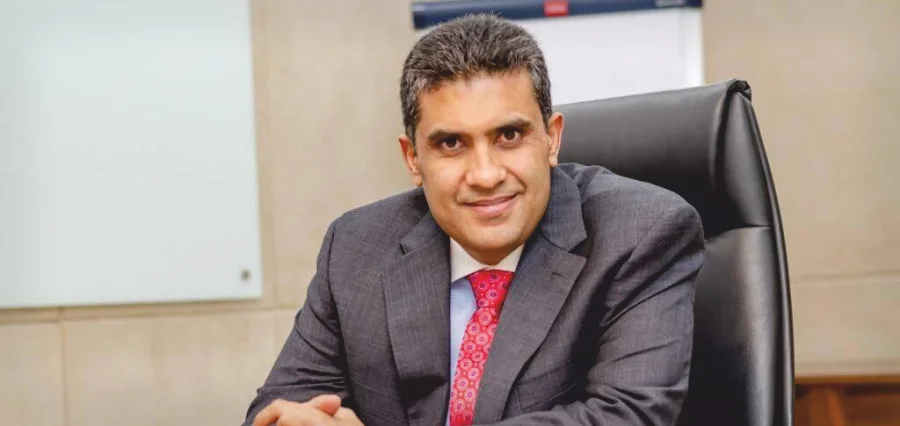
Across Kenya, a quiet shift is taking place in how healthcare is organised and delivered. The change is not driven by one major reform or a large international program. Instead, it comes from the steady rise of systems that are more connected, more predictable and built around the everyday movement of patients. At the centre of this shift is Jayesh Saini, the healthcare operator behind a network that spans clinics, hospitals, pharmaceutical manufacturing, specialist treatment and community outreach.
What makes this network notable is not its size alone. It is the way the pieces work together. In a landscape often marked by gaps between facilities, Saini’s model attempts to build continuity. This approach is increasingly seen as part of a wider transformation taking shape across African healthcare.
Primary Care as the Front Line
Any attempt to build a reliable health system begins with access. Through Bliss Healthcare, Saini oversees more than 54 outpatient centers across 40 counties. These sites see roughly 100,000 patients every month. Families use them for basic diagnosis, chronic care follow up and essential imaging.
Bliss clinics act as the early detection layer. They identify cases that require higher-level support and direct patients into the next stage of the system. For many Kenyans, this is their first experience of a consistent healthcare pathway.
Hospitals That Anchor Regional Care
The second tier of the ecosystem operates within Lifecare Hospitals, which now includes 7 facilities across Kenya and Tanzania. Together they manage more than 700 beds and handle complex services such as cardiology, nephrology, oncology, mental health and emergency response.
Internal data indicates that Lifecare has completed more than 45,000 surgeries and treated over 250,000 patients. In counties like Kisii, Bungoma and Meru, these hospitals have become stabilising forces. They reduce the need for long-distance travel for procedures that would otherwise require referral to Nairobi.
Specialist Care for Evolving Needs
Healthcare in Africa is no longer defined only by infectious disease or emergency care. There is a rising demand for specialised treatment. This is visible in Jayesh Saini’s Fertility Point centres, which have completed more than 5,000 IVF cycles with an approximate success rate of 65 per cent. More than 3,000 pregnancies have been recorded.
The centres operate in Nairobi, Mombasa and Kisumu and draw patients from neighbouring countries. Their growth reflects a broader continental trend where families seek access to services that had previously been concentrated in a few elite urban clinics.
Local Manufacturing That Supports Stability
A dependable system relies on a dependable supply of medicines. This is the function of Dinlas Pharma, the manufacturing arm within the network. By producing essential drugs locally, Dinlas helps reduce shortages that frequently affect both public and private facilities.
Local production lowers delays, stabilises pricing and ensures that clinics and hospitals within the network are stocked when demand rises. This makes clinical services more predictable and reduces disruption for patients.
Community Work That Reaches the Margins
Beyond clinical care, the system extends into outreach and social development through the LifeCare Foundation, launched in 2022. The foundation focuses on health access, educational support and poverty-related challenges. Its programs include screening camps, health education and targeted assistance for families who struggle to reach formal care.
The foundation covers populations that often do not appear in national reporting. This reflects an understanding that health outcomes are shaped by more than medical intervention alone. Early information, economic resilience and community trust all influence whether people seek treatment in time.
A Connected Structure Instead of Isolated Facilities
The strength of the model lies in how the components interact. A patient may begin at a Bliss clinic, move to a Lifecare hospital for specialist care, rely on medicines produced through Dinlas Pharma and receive follow up support through the LifeCare Foundation. Fertility Point adds another dimension for specialised care.
Each part supports the others. This reduces fragmentation, one of the largest barriers to effective healthcare across Africa. The design is not based on a single concept, but on many adjustments made over years of observing how patients move through the system.
A Shift Shaped by Practical Decisions
People who work within the network describe Saini as a problem solver rather than a theorist. Much of the system’s growth came from noticing practical gaps. Patients were travelling long distances, so hospitals were placed closer to counties. Medicines were arriving inconsistently, so manufacturing was added. Communities lacked outreach, so the foundation was created.
None of this is presented as a grand vision. Instead it reflects the accumulation of smaller decisions that gradually build a more coherent system.
A Model for a Changing Continent
African health systems face rising pressure from chronic diseases, population growth and fragile supply chains. In this environment, the trend toward coordinated networks is becoming more important. Governments alone cannot meet the demand. Blended systems that combine public capacity with private coordination are likely to define the next phase of healthcare development.
In this evolving landscape, Jayesh Saini represents one of the figures shaping what this new era might look like. His model is not complete, but it is functional. It offers a concrete example of how African healthcare can become more predictable and more connected without relying on massive budgets or complex reforms.
If Africa is indeed entering a new healthcare era, it will be shaped by people who build links where gaps once existed. Jayesh Saini’s network sits at the center of that shift. It shows that the future of healthcare in the region will depend on systems that work together and on individuals who recognise the value of connection.